
TLDR
Targeted back exercises for scoliosis helps strengthen the muscles that support your spine, improve posture awareness, and make daily movement feel more comfortable and controlled. Exercise is not something to avoid with scoliosis; it is something to approach with the right guidance. A Schroth certified Physiotherapist can assess your specific curve, goals, and movement patterns to build a plan that fits your body and your life.
If you have scoliosis, you have probably asked yourself some version of this question: Should I even be exercising? Maybe your spine curves to one side. Maybe you feel tightness or discomfort after certain movements. Maybe you were diagnosed recently and no one gave you a clear answer about what is safe. Maybe you have been living with pain for so ling that you are almost on the verge of giving up and thinking that this is part of my life.
That uncertainty is common, and it is completely understandable. But avoiding movement entirely is rarely the answer. In fact, the right back exercises for scoliosis may be one of the most helpful things you can do for your strength, your comfort, and your confidence in daily life.
This post will walk you through why movement fear happens, what safe and targeted exercise looks like for scoliosis, what factors shape a good exercise plan, and how physiotherapy helps you move forward with a clear direction.
Why Does Scoliosis Make You Afraid to Move?
Fear of movement after a scoliosis diagnosis is one of the most common experiences people describe. You notice your posture, or someone you know, has changed. Certain positions feel stiff or uncomfortable. You worry that the wrong move might make things worse.
That protective instinct makes sense. But when fear leads to avoiding movement altogether, something predictable happens: muscles weaken, stiffness increases, and daily activities start to feel harder. The world gets smaller, not because of the curve itself, but because of what you stopped doing around it.
According to Physiopedia, scoliosis involves a lateral curvature of the spine, often accompanied by vertebral rotation, which affects the way muscles on either side of the spine work. This imbalance is exactly why random, unsupervised movement carries real risk. But it is also why guided, targeted movement has value. The goal is not to push through pain blindly. It is to learn what your body can do safely, and to rebuild your trust in movement step by step.
Is Exercise the Enemy, or Part of Your Support System?
Exercise is not the enemy. When chosen carefully and matched to your specific curve and goals, physical activity supports the muscles around your spine, improves how your rib cage and posture work together, and helps you move through daily life with more ease.
Here is where it gets important: there is a significant difference between generic exercises you find online and scoliosis-specific movement guided by a Schroth trained Physiotherapist. Many people living with scoliosis find temporary relief doing general stretches or following videos they found on their own. The problem is that those exercises are not designed for your curve, your movement patterns, or your goals. In some cases, they could reinforce the very imbalances you are trying to address.
Johns Hopkins Medicine describes the Schroth method, a scoliosis-specific exercise approach that uses posture correction, breathing, and muscle activation tailored to the patient’s individual curve pattern. This type of approach reflects what physical therapy for scoliosis looks like at its most intentional: personalized, progressive, and grounded in your specific body.
The life-centered goal is not to complete a set of exercises for its own sake. It is to sit through a full school day, return to work comfortably, carry groceries without bracing yourself, or sleep through the night without waking up in pain.
What Do Safe Exercises for Scoliosis Usually Focus On?
There is no single list of exercises that works for every person with scoliosis. That said, physiotherapy-guided programs often address several overlapping areas:
Core Strengthening for Scoliosis
Core strengthening for scoliosis focuses on gentle trunk control and deep abdominal engagement rather than high-load exercises like sit-ups or crunches. The goal is to build stability that supports your spine during the movements you do every day: standing, walking, lifting, sitting. Again, not all core exercises seen on social media are safe. Often people do the wrong ones making the curve worse and in fact, result in more back pain.
Scoliosis Stretches and Mobility Exercises
Scoliosis stretches and mobility exercises address tight areas without forcing the spine into uncomfortable positions. Improving mobility on one side of the body while building strength on the other is a common pattern in scoliosis rehab, because the curve often creates asymmetry in both flexibility and strength. We must be aware of our curved spine in space as we do the stretches, as they may stretch the wrong side of the curve.
Breathing and Posture Awareness
Scoliosis affects the rib cage as well as the spine. Learning how to breathe with awareness of rib cage position and spinal rotation is a meaningful part of many scoliosis programs. Research published through the National Institutes of Health supports the role of specific breathing-focused exercises in scoliosis rehabilitation.
Full-Body Strength and Balance
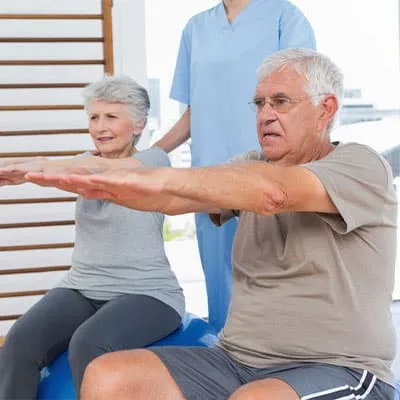
Strong hips, legs, and shoulders help distribute load across the whole body rather than placing excess demand on the spine. For older adults especially, balance training and functional movement work, such as practicing stairs, transfers, and walking on uneven surfaces, are often a central part of the program. Scoliosis treatment is working on the person as a whole, not just the spine. So we cannot forget the rest of the body during the strength training, posture correction and elongation of the spine.
What Makes an Exercise Right for Your Curve and Your Life?
The right back exercises for scoliosis depend on the person, not just the diagnosis. A physiotherapist will consider a wide range of factors before recommending anything:
| Factor | Why It Matters |
| Curve location and pattern | A thoracic curve behaves differently than a lumbar curve; exercises are selected accordingly |
| Age and stage of growth | Children, teens, and adults have different rehabilitation needs and progressions |
| Pain behaviour | Understanding when pain increases or decreases guides safe movement choices |
| Strength and flexibility gaps | Identifying which muscles are underactive or overworked shapes the program |
| Surgical history | Post-operative patients require specific exercise precautions and progressions |
| Personal goals | Returning to sport, managing work demands, or improving sleep all point to different priorities |
This is why working with a physiotherapist trained in Scoliosis Management makes such a practical difference. A plan built around your curve, your daily life, and your goals gives you something you can actually follow and build on, rather than something generic that leaves you guessing.
Are There Movements That Need Modification?
Saying “avoid all exercise” is rarely helpful. But some movements benefit from modification or supervision depending on your symptoms and medical situation.
Movements that often warrant assessment or adjustment include heavy loaded twisting under fatigue, repeated deep back bends, high-impact activity during a pain flare, and any exercise that produces sharp or radiating pain. That last point is worth remembering as a simple safety filter:
- Sharp, worsening, or radiating pain should be assessed before continuing
- Numbness, tingling, or weakness in the arms or legs warrants prompt attention
- Dizziness or difficulty breathing during exercise should not be pushed through
- Pain that is significantly worse the following day suggests the load or range needs adjustment
Safe exercises for scoliosis should feel purposeful and progressive. Start with lower intensity and shorter sessions. Track how your body responds over 24 hours. Build gradually. That pacing approach is not timid; it is how you create consistent progress without setbacks.
How Does the Schroth Program Help You Turn Movement Into a Plan?
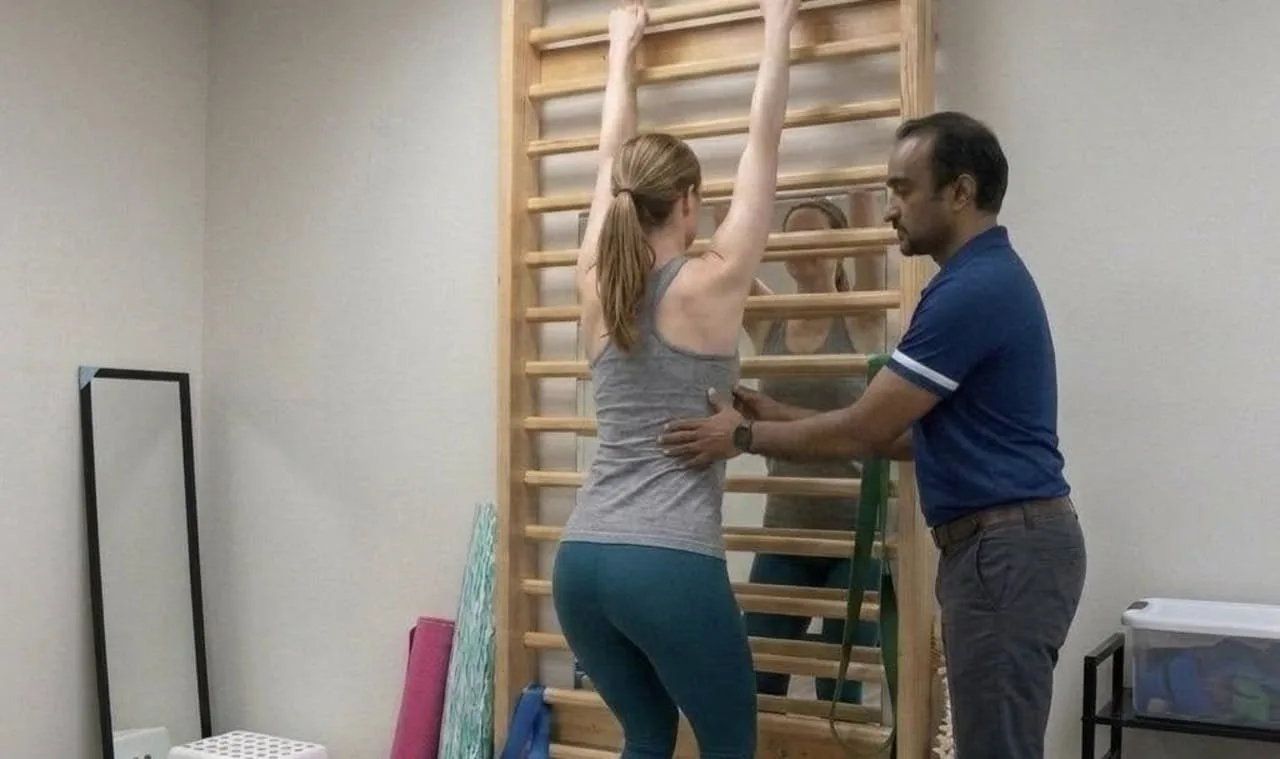
A physiotherapy assessment by a Schroth therapist for scoliosis gives you a clear starting point. Your physiotherapist will evaluate your posture, strength, flexibility, balance, breathing patterns, and pain behavior before recommending anything. From there, they build a program that progresses with you.
A typical scoliosis physiotherapy program often includes:
- Education about your curve and how your body compensates around it
- Guided exercise sessions to establish correct movement patterns
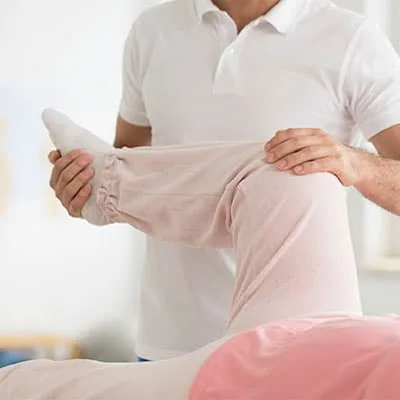
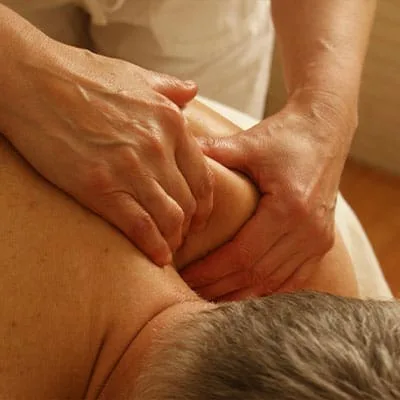
- Hands-on care when appropriate to address pain or stiffness
- A home program you can follow between sessions
- Regular reassessment and progression as your strength and confidence grow
For patients in Cambridge, Kitchener, Waterloo, Guelph, Ontario, working with a local physiotherapy team means your plan adjusts as your life changes. Whether you are a teenager managing a growing spine, an adult returning to physically demanding work, or an older adult focused on staying active and preventing falls, the program evolves with your goals.
You do not have to guess which movements are safe. That is the point. With the right guidance, exercise stops being something to fear and becomes a tool you trust.
Key Takeaways
- Back exercises for scoliosis are not inherently dangerous; the risk lies in unsupervised, non-specific movement that does not account for your individual curve pattern.
- Core strengthening, targeted mobility work, breathing awareness, and functional movement are common components of scoliosis-specific rehabilitation programs.
- Exercises found in generic online videos may not match your curve type, strength gaps, or goals; they may reinforce existing imbalances rather than addressing them.
- Children, teens, adults, and older adults with scoliosis often need different exercise choices, intensities, and progressions based on age, curve severity, and health history.
- Sharp, radiating, or worsening pain during exercise warrants assessment before continuing; discomfort that eases with movement is a different signal than pain that worsens.
- A physiotherapy-guided scoliosis plan by a Schroth Physiotherapist is built around your specific curve, symptoms, and daily life goals, not a one-size-fits-all protocol.
Move With Confidence. Live Without Limits.
If scoliosis pain, stiffness, or uncertainty about movement is limiting what you do each day, you do not have to figure it out alone. Cambridge Physiotherapy & Rehab Center offers customized scoliosis rehabilitation programs built around your body, your curve, and the life you want to get back to.
Book an assessment to learn which back exercises for scoliosis are appropriate for you and how to progress safely. The goal is straightforward: help you get back to living life your way, with movement you can trust.
Frequently Asked Questions
Can back exercises for scoliosis correct my curve?
Exercises support strength, posture awareness, mobility, and comfort, but they do not guarantee curve correction. What is realistic for you depends on your age, curve type, symptoms, and medical history. Your physiotherapist can give you an honest picture of what your program is working toward and how to measure progress in ways that matter to your daily life.
Are scoliosis exercises safe for children and older adults?
They can be, when properly selected and supervised. A child navigating a growing spine, a teenager managing posture for school, and an older adult focused on stability and fall prevention will each need a very different set of exercises, intensity levels, and goals. Age-appropriate programming is a core part of safe scoliosis rehabilitation.
Should I stop exercising if scoliosis causes pain?
Not necessarily. Many people need to modify the type, range, load, or pace of exercise rather than stop entirely. However, you should seek assessment if pain is sharp, worsening, radiating, or associated with numbness, weakness, balance changes, or difficulty breathing. A physiotherapist can help you identify which movements to adjust and which ones are safe to continue.