

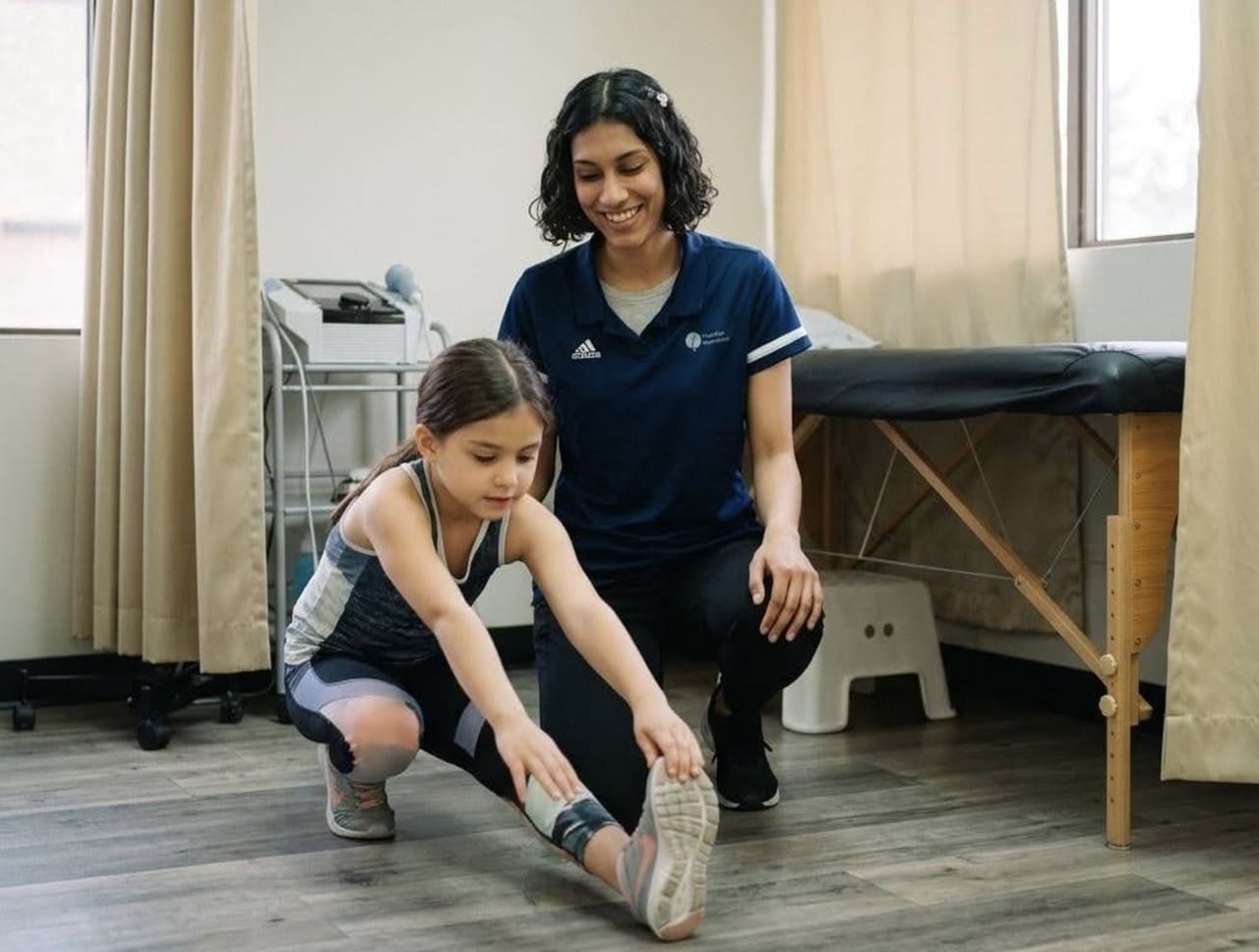
Pre-season screening and conditioning can help identify movement gaps, strength imbalances, and unresolved injuries before your child returns to sport, but no program eliminates all risk. The most practical approach combines a physiotherapy assessment, gradual conditioning, and consistent warm-ups matched to your child’s age, sport, and history. If your child had an injury last season or is moving differently than usual, a pre-season assessment at Cambridge Physiotherapy & Rehab Center is a sensible starting point.
Sports season is exciting. Registrations go in, equipment gets dusted off, and your child is ready to go. And somewhere in that excitement, a quiet worry settles in for most parents: what if they get hurt?
It is a fair concern. Kids often jump from weeks of lower activity straight into full-speed practices, and bodies that have not been moving at that level need time to adjust. The good news is that preparation helps. The challenge is knowing what preparation actually looks like, and separating useful steps from noise.
This guide covers what pre-season screening can realistically tell you, which conditioning approaches are worth your time, how warm-ups make a difference, and when to consider booking a physiotherapy assessment before the season begins.
Why Do Kids Get Hurt When Sports Restart?
Early in a season, many youth athletes are doing more than their body has recently prepared for. That gap between what the body is used to and what the sport demands is where a lot of injuries happen.
According to the National Athletic Trainers’ Association Position Statement on Prevention of Pediatric Overuse Injuries, a rapid increase in training volume is one of the most consistent risk factors for overuse injuries in young athletes. It is not always a dramatic fall or collision. Often it is repetition, loading, and intensity that add up faster than a young body adapts.
Common risk factors worth watching for include:
- A sudden jump in training volume or intensity at the start of a season
- A previous injury that was never fully addressed, such as a sprained ankle, stress fracture, or knee issue
- Growth spurts, which affect how the body coordinates movement and manages flexibility
- Poor sleep, low energy, or too many overlapping activities
- Pain that changes how your child moves or runs
Not every ache after practice means something serious. Muscle soreness during a ramp-up period is normal. But pain that keeps returning, changes how your child moves, or lingers longer than a day or two deserves attention before the season is fully underway.
Winter sports deserve particular mention here. Hockey, skiing, and skating involve fast accelerations, hard stops, and contact on unpredictable surfaces. If your child carried an old ankle sprain or knee strain into the off-season without fully recovering, those demands can trigger a flare-up quickly. Addressing that history before the first practice is far easier than managing it mid-season.
What Can Pre-Season Screening Actually Tell You?
Pre-season screening is a structured assessment of how your child moves, where their strength and balance stand, what their injury history includes, and whether they appear ready for the physical demands of their sport. Think of it as a readiness check, not a report card.
A good screening looks at:
- Movement patterns that put extra strain on joints or muscles
- Strength or balance differences between the left and right sides
- Lingering limitations from a past sprain, fracture, surgery, or rest period following a concussion
- Whether your child’s current physical readiness matches what their sport requires
What screening cannot do is equally worth understanding. It cannot predict every injury. It is not a guarantee that a clear result means a safe season. And it should never be framed as a pass-or-fail label for a child. Research published in Strategies to Prevent Injury in Adolescent Sport makes clear that multi-modal approaches, not single screening moments, produce the most meaningful reductions in youth injury rates.
Where screening earns its place is in identifying specific, actionable gaps. Sports physical therapy for kids can translate those findings into a practical conditioning plan, so a screening is most useful when it connects directly to next steps.
What Conditioning Is Worth Your Time Before the Season?
The principle behind pre-season conditioning is straightforward: build your child’s physical capacity before the season asks them to perform at full intensity. Bodies adapt when they are loaded gradually. They struggle when load increases faster than adaptation.
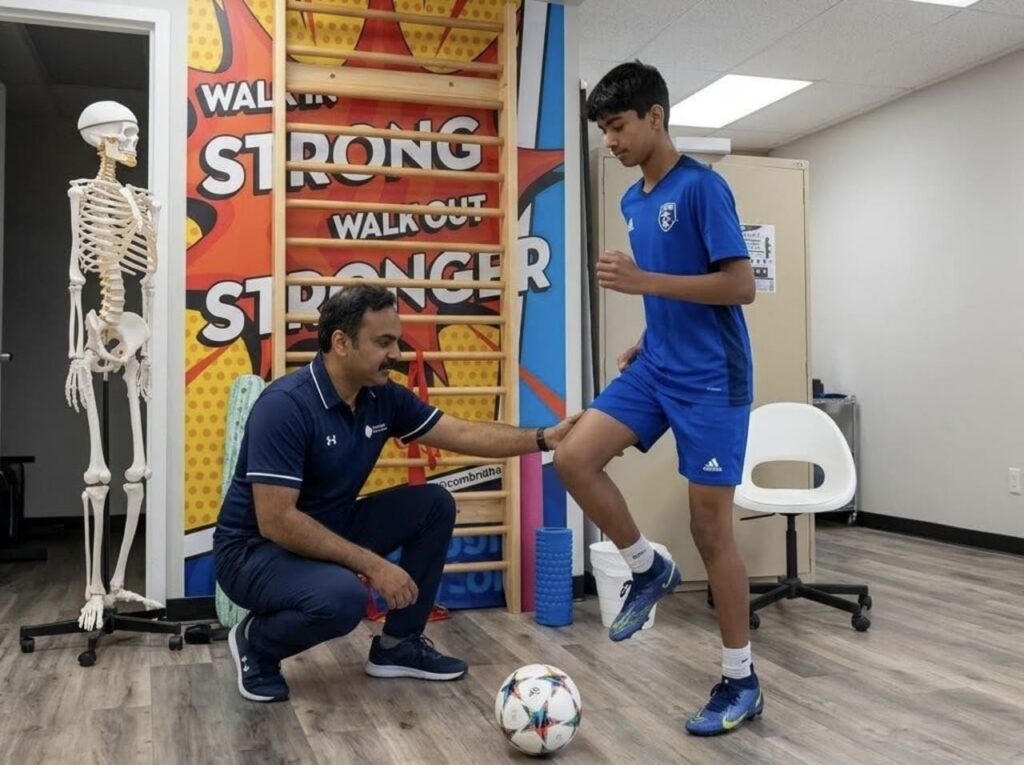
Research from the NIH on Integrative Neuromuscular Training in Youth supports early introduction of neuromuscular training, which is training that improves how muscles, joints, and the nervous system work together during sport movements. When introduced before or at the start of a season, this type of conditioning has been associated with lower injury rates in youth athletes.
Conditioning priorities for young athletes often include:
- Gradual return to running, jumping, skating, or throwing, with volume increasing over weeks
- Strength work for hips, knees, ankles, trunk, and shoulders relative to the sport
- Balance and coordination drills on both legs individually and together
- Landing mechanics and change-of-direction control
- Recovery days, adequate sleep, hydration, and basic nutrition awareness
A note on orthotics: for children with foot or ankle instability, custom or prefabricated orthotics may support better alignment during high-demand activities. This is not a universal recommendation, but if your child repeatedly rolls their ankle, has flat feet that cause knee tracking issues, or has been told their foot mechanics affect their movement, it is worth discussing with a physiotherapist during an assessment.
Conditioning for kids should always be age-appropriate. Younger athletes do not need adult-style weight programs. Bodyweight movements like squats, calf raises, step-downs, single-leg balance, and light agility patterns are appropriate starting points for many youth athletes when guided properly.
What Makes a Warm-Up Actually Useful?
A few static stretches before the whistle blows does not prepare a young body for sprinting, cutting, or contact. Research consistently shows that static stretching alone before activity does not meaningfully reduce injury risk and does not prepare the neuromuscular system for high-speed sport movements.
A more effective warm-up for youth sports is dynamic and progressive. It raises body temperature, activates the muscles needed for the activity, and gradually approaches the intensity of the sport itself.
| Less Useful Warm-Up | More Useful Warm-Up |
| Standing static stretches held for 30-60 seconds | Light jog or skipping to raise body temperature |
| Random movements with no progression | Dynamic mobility: leg swings, walking lunges, hip circles |
| Too short (under 5 minutes) before high-speed play | Balance and single-leg control drills |
| Only done before the first game of the season | Jumping and landing mechanics practice |
| Not matched to the sport’s movement demands | Sport-specific movements at increasing intensity |
Consistency matters as much as content. A warm-up that happens regularly, before every practice and every game, is more protective than a detailed protocol done twice. If your child’s team warm-up is rushed or minimal, adding a brief personal warm-up beforehand is a practical step.
What Claims Should You Question?
Every prevention program sounds compelling. Some are genuinely helpful. Others are expensive, poorly supported, or built on fear rather than evidence.
A simple filter for evaluating any screening or prevention program:
- Does it explain clearly what it measures and why?
- Does it connect findings to a concrete, age-appropriate follow-up plan?
- Does it account for your child’s individual injury history and sport demands?
- Does it acknowledge that injuries cannot be fully eliminated, only prepared for?
Red flags worth noting:
- Any program promising guaranteed injury prevention
- Expensive technology-heavy testing with no clear plan attached to results
- Messaging that makes parents feel they are failing if they do not participate
- Programs that apply adult training models to children without modification
Practical pre-season injury prevention for young athletes follows a clear pattern: assess, prepare, progress gradually, recover adequately, and adjust when something changes. Anything that skips those fundamentals in favour of a single intervention is worth approaching with caution.
When Should You Book a Physiotherapy Assessment Before the Season?
A pre-season physiotherapy assessment is worth considering when there are specific, concrete reasons to want a closer look at your child’s readiness.
Consider booking if:
- Your child had an injury last season and still moves differently or guards that area
- Pain appears during running, jumping, throwing, skating, or cutting movements
- Your child avoids certain movements or has lost confidence in their body
- There is recurring swelling, limping, stiffness, or weakness after activity
- Your child is returning after surgery, a fracture, a long break, or concussion-related rest
During a physiotherapy assessment, a physiotherapist reviews your child’s sport demands, injury history, and current movement. They assess strength, flexibility, balance, and motor control. From there, they build a customized conditioning plan suited to your child’s age, goals, and the season schedule ahead. When appropriate, they may also connect with your child’s broader care team.
The goal is not a perfect report. It is a clear picture of where your child stands and a practical plan for moving forward confidently.
Key Takeaways
- A rapid increase in training volume at the start of a season is one of the most consistent risk factors for injury in young athletes, not one-time events.
- Pre-season screening identifies movement gaps, strength imbalances, and previous injury limitations; it does not predict or prevent all injuries.
- Early neuromuscular training, which improves how muscles and joints work together during sport, has been associated with lower injury rates in youth athletes when introduced before or at the start of a season.
- Dynamic, progressive warm-ups that include mobility, balance, landing practice, and sport-specific movements are more useful than static stretching alone.
- Old injuries, especially to the ankle, knee, or foot, are worth addressing before winter sports such as hockey and skiing begin, as the demands of those sports can quickly trigger unresolved issues.
- A pre-season physiotherapy assessment is most valuable when combined with a customized follow-up plan, not when used as a standalone checklist.
Is Your Child Ready to Move With Confidence This Season?
If last season’s injury is still in the back of your mind, or you want a clearer picture of your child’s readiness before practices ramp up, Cambridge Physiotherapy & Rehab Center is here to help.
Our team assesses your child’s movement, strength, balance, and sport-specific demands, then builds a customized plan that fits their age, goals, and timeline. Whether they need a gradual return-to-play program, guidance on foot and ankle stability, or a structured conditioning plan before the first practice, we work with you and your child every step of the way.
Book a pre-season physiotherapy assessment in Cambridge, Ontario, and help your child get back to the activities they love with a plan that makes sense for them.
Frequently Asked Questions
Can pre-season screening prevent all sports injuries in kids?
No. Pre-season screening cannot guarantee an injury-free season. What it does is identify movement limitations, strength gaps, balance issues, and previous injury concerns so that your child enters the season better prepared. Reducing known risk factors is the realistic and evidence-informed goal.
What is a good warm-up for young athletes?
A useful warm-up for youth sports is typically dynamic and progressive. It often includes light aerobic movement, dynamic mobility drills such as leg swings or walking lunges, balance and landing practice, and sport-specific movements that gradually increase in intensity. The right warm-up depends on your child’s age, sport, and current physical readiness, and it works best when done consistently, not just before the first game of the season.
Should my child see a physiotherapist if they are not currently injured?
A physiotherapy assessment before a season starts is appropriate even without an active injury, particularly if your child is returning after time off, had a previous injury, is moving differently than usual, or is entering a more physically demanding season. A physiotherapist can identify early limitations and build a conditioning plan that addresses them before they become bigger barriers to participation.