
Ankle recovery moves through four distinct stages: reducing pain and restoring movement, building strength, retraining proprioception, and adding real-life demands before returning to full activity. Pain and swelling often settle before the nervous system fully relearns accurate ankle feedback, which is why skipping the balance and stability stages leads to re-injury. A tailored plan that accounts for your goals, activity level, and overall lower-body function gives your ankle the best foundation for getting back to what matters.
Your ankle swelling has gone down. The sharp pain has settled. You figure you’re ready to get back to your normal routine. Then you take a step on uneven ground and your ankle rolls. Or you try a light jog and something feels off. It doesn’t quite feel like yours anymore.
This is one of the most common and frustrating parts of ankle recovery. The absence of pain is not the same as a fully recovered ankle. Strength, balance, and the nervous system’s ability to react quickly all need their own time and attention. Ankle stability exercises exist precisely to close that gap.
This post walks through the full recovery journey, from early pain-relief work to ankle proprioception exercises, ankle balance exercises, and eventually return-to-sport or return-to-activity drills. It also explains why the timeline takes weeks, and what consistent, goal-oriented rehab actually looks like from the inside.
Stage 1: What Does Early Ankle Rehab Actually Involve?
Early ankle rehab exercises after injury focus on reducing irritation and helping the joint move safely again. The goal at this stage is not performance; it is restoring comfortable, controlled movement without increasing pain or swelling.
Common early exercises include gentle range-of-motion movements like ankle pumps, tracing the alphabet with your foot, and slow circular rotations. These help maintain circulation and prevent stiffness while the tissue begins to settle. Swelling management, load modification, and guided walking patterns also play a role at this stage.
One thing worth understanding early: reduced pain does not mean the ankle is ready for running, stairs, uneven terrain, sport, or demanding work tasks. Those demands require strength and balance that early-stage exercises have not yet addressed.
Safety note: after trauma, surgery, severe swelling, an inability to bear weight, numbness, or any worsening of symptoms, a regulated health professional should assess the ankle before any exercise program begins. Research published through the NIH supports using clinical guidelines in ankle sprain care to ensure rehab decisions are grounded in assessment, not assumption.
Stage 2: Why Do Ankle Strengthening Exercises Come Before Balance Work?
Ankle strengthening exercises generally come before advanced balance drills because muscles need enough capacity to control the joint before they’re asked to react to unpredictable forces. Asking a weak ankle to balance on a wobbly surface is like asking someone to sprint before they can walk steadily.
The key muscle groups involved in ankle stability include the calf, the muscles along the shin, the small muscles of the foot, and the hip and upper leg muscles. This last point matters: the ankle does not function in isolation. As any physiotherapist working with ankle conditions knows, the knee and hip are part of the same chain and need to be assessed and addressed alongside the ankle. Weakness or stiffness higher up the chain changes how load travels through the ankle with every step.
Strengthening exercises at this stage include resisted ankle movements using a band, calf raises, controlled heel-to-toe walking, step-ups, and progressive squats. Tolerance to walking distance also increases gradually.
Ankle stability exercises work at their full potential when they match the person’s current strength and pain level. A child recovering from a sprain, an older adult managing arthritis, a post-surgical patient, and an athlete all need different starting points. Personalized progression is not optional; it is what makes the exercises safe and effective.
Stage 3: How Do You Retrain Proprioception When the Ankle Still Feels Wobbly?
Proprioception is your body’s sense of where your ankle is in space without having to look at it. It is how your foot automatically adjusts when you step on a small stone or shift direction quickly. After an ankle injury, this feedback system is disrupted, and it recovers more slowly than inflammation does.
This is a key reason why so many people experience re-injury: the ankle feels fine, but the nervous system has not yet rebuilt its reliable, fast-response feedback loop. NIH-hosted research on ankle sprain rehabilitation supports the understanding that proprioceptive deficits persist well after pain and swelling resolve, reinforcing why this training stage deserves dedicated attention.
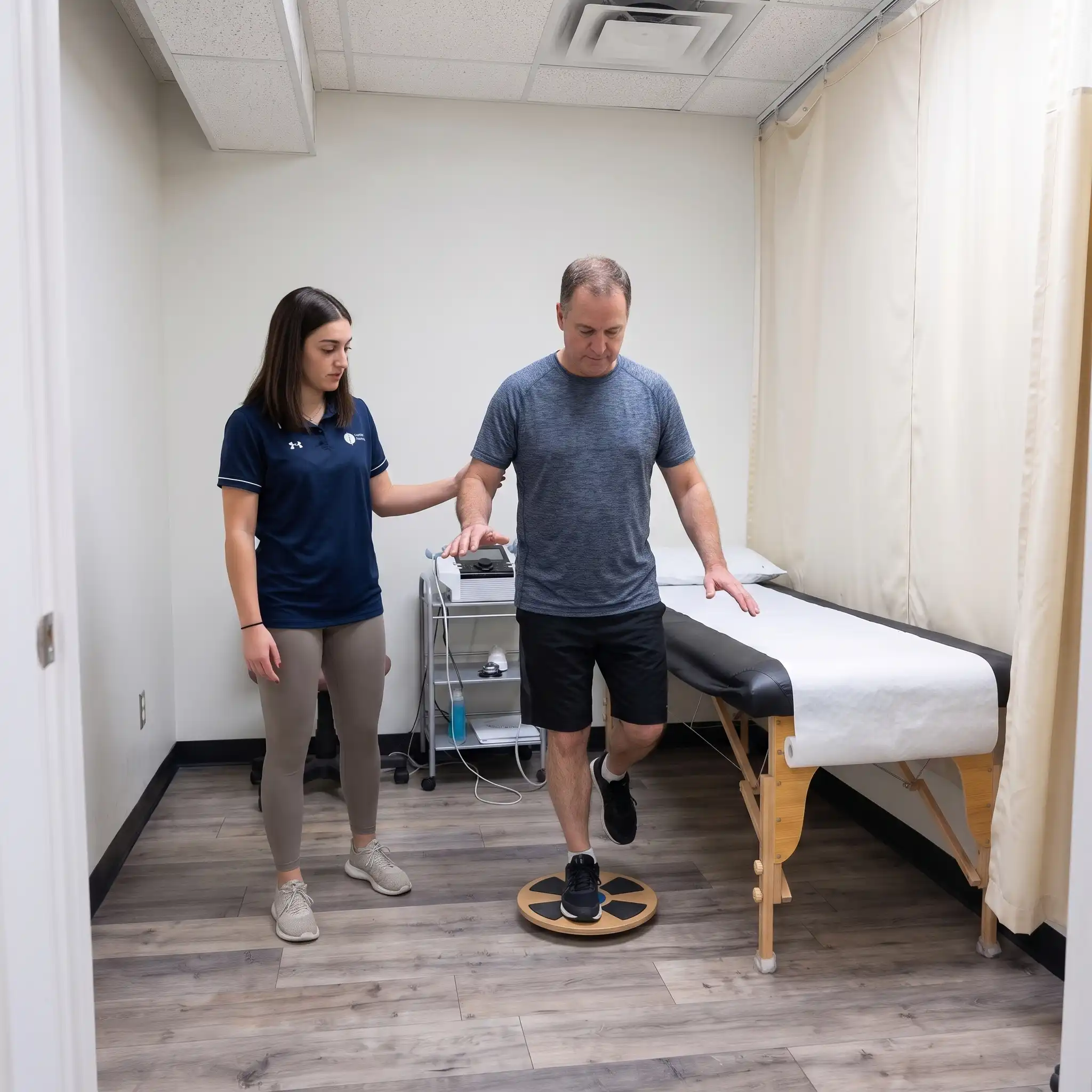
Ankle proprioception exercises and ankle balance exercises progress gradually. They include supported single-leg standing, weight shifting side to side, tandem stance (one foot directly in front of the other), balance pad work, reaching tasks while standing on one leg, and controlled direction changes. The UCSF Sports Rehabilitation foot and ankle exercise progressions reflect a similar staged approach to building proprioceptive control over time.
Progress here comes from repeated, consistent practice over weeks, not from one difficult session. Balance reactions improve through volume and regularity. Doing a little, often, produces more reliable improvement than doing a lot once.
Stage 4: What Does Real-Life Demand Training Look Like Before Full Return to Activity?
Walking steadily on flat ground is a good sign. It is not, however, the same as handling curbs, stairs, grass, uneven snow-covered sidewalks, a busy work floor, or the demands of a sport. This stage bridges that gap by introducing environments and movements that reflect actual daily life.
Functional rehab at this stage includes carrying objects while walking, stepping over obstacles, transitioning between surfaces, increasing walking pace, and managing environmental changes like slopes or steps. For people returning to sport, return-to-sport ankle exercises become part of the picture: hopping, landing mechanics, cutting movements, acceleration and deceleration drills, and sport-specific patterns tailored to the actual demands of that activity. What a soccer player needs differs significantly from what a recreational cyclist or a construction worker needs.
Return-to-sport or return-to-work decisions should be based on demonstrated function, strength, balance, control, and clinical assessment. The calendar alone is not a reliable guide. How the ankle actually performs under load matters more than how many weeks have passed.
| Recovery Stage | Primary Focus | Example Exercises |
|---|---|---|
| Stage 1: Pain Relief | Reduce irritation, restore movement | Ankle pumps, alphabet tracing, gentle range-of-motion |
| Stage 2: Strengthening | Build muscle capacity around the joint | Calf raises, resisted movements, step-ups, squats |
| Stage 3: Proprioception | Retrain nervous system feedback | Single-leg standing, balance pad work, reaching tasks |
| Stage 4: Functional Demands | Prepare for real-life and sport activity | Uneven surfaces, hopping, cutting drills, sport-specific movements |
Why Does Ankle Recovery Take Weeks Even After Pain Improves?
Tissues, muscles, balance reactions, and confidence all recover on different timelines. Pain is often the first thing to settle. Strength takes longer. Proprioception takes longer still. And the psychological confidence to push off, pivot, or land without hesitation comes last for many people.
Common setbacks include progressing too quickly once pain decreases, skipping balance and proprioception work entirely, stopping exercises as soon as daily life feels manageable, or returning to sport before the ankle reacts reliably under pressure. Any of these patterns increases re-injury risk.
Tracking functional progress helps. Can you walk farther than last week? Use stairs more confidently? Stand longer without discomfort? Change direction with less hesitation? These markers tell a more complete story than pain levels alone.
With a tailored plan and steady practice, many people notice meaningful progress toward moving with more confidence in their daily lives. Timelines vary based on the injury type, age, any surgery involved, overall health, and what activity the person is working toward returning to.
How Does Physiotherapy Help Guide Each Stage Safely?
A physiotherapist assesses the full picture before building a plan. That includes pain and swelling levels, range of motion, strength, balance, gait patterns, footwear, activity goals, sport or work demands, and fall risk where relevant. No two ankle injuries are identical, and no two recovery plans should be either.
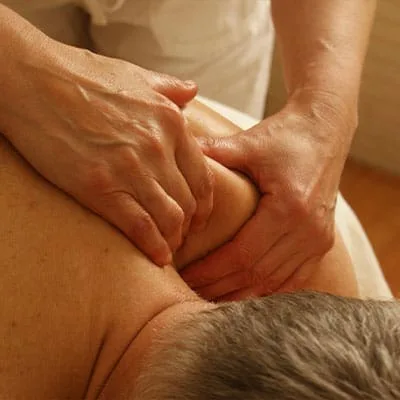
A plan built from that assessment connects hands-on care, home exercises, strengthening progressions, balance retraining, and return-to-activity planning in a logical sequence. Massage therapy supports tissue recovery and comfort where appropriate. The structure reflects the person’s goals, whether that is returning to competitive sport, completing a full workday on their feet, or walking confidently on Cambridge, Ontario’s varied terrain through every season.
A young athlete, an older adult focused on fall prevention, and someone recovering after ankle surgery should not follow the same program. Customized care is not a marketing phrase; it is what makes rehab safe and effective across different populations, ages, and goals. For more information about how the clinic addresses ankle pain and ankle injury, you’ll find condition-specific details worth reviewing before your first visit.
Key Takeaways
- Ankle recovery moves through four stages: pain relief, strengthening, proprioception retraining, and functional demand training. Skipping stages increases re-injury risk.
- The nervous system relearns proprioceptive feedback more slowly than inflammation resolves, which is why the ankle often feels wobbly long after pain has settled.
- The ankle does not function alone; the knee and hip are part of the same mechanical chain and should be assessed and addressed as part of a complete rehab program.
- Ankle stability exercises are most effective when matched to the person’s current strength, pain level, age, and specific activity goal, whether that is returning to sport, work, or daily walking.
- Return-to-sport or return-to-work readiness should be determined by demonstrated function, strength, and balance control, not by time since injury alone.
- Consistent practice over weeks, rather than intense bursts of training, produces more reliable improvement in balance and proprioceptive reactions.
Ready to Stop Guessing and Start Moving With Confidence?
If your ankle still feels weak, uncertain, or inconsistent, you do not have to piece together your recovery on your own. Cambridge Physiotherapy & Rehab Center builds customized plans that move with you from pain relief through strength, balance, and confident return to the activities that matter in your life. Book an assessment and take the next step toward moving with confidence.
Frequently Asked Questions
How often should I do ankle stability exercises?
Frequency depends on the injury and the stage of healing. Gentle range-of-motion exercises in the early stages are often well-tolerated daily, while strengthening and balance work typically require rest between sessions to allow tissue adaptation. A physiotherapist can help you set a schedule that progresses safely without overloading the ankle.
Why does my ankle still feel unstable if the pain is mostly gone?
Pain and swelling often improve before strength, balance, and proprioception fully recover. The nervous system needs repeated, consistent practice to rebuild reliable ankle reactions. Feeling wobbly after pain settles is common and expected; it signals that the proprioception and strengthening stages of rehab still need attention.
When can I start return-to-sport ankle exercises?
Sport-specific drills are appropriate after pain is well-controlled, strength has improved meaningfully, and balance reactions are reliable under single-leg and dynamic conditions. Readiness is best determined through clinical assessment of your function, control, and strength, not by a fixed number of weeks since the injury occurred.